
Michael – Movie Review
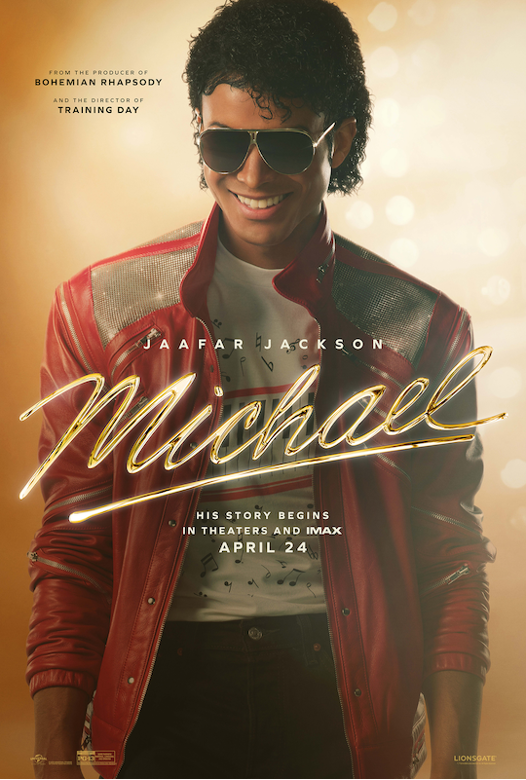 Michael – Movie Review
This screening was, without exaggeration, the wildest I’ve ever attended. The place was buzzing. Right at the foot of the IMAX screen, a DJ was blasting Michael Jackson classics while three major local radio stations had their own DJs hyping up the crowd. Before anyone even sat down, it felt like a full‑blown event. There was a three‑person MJ dance‑off judged by the audience, a Michael trivia battle, and a final open‑invite dance showcase where at least twenty people jumped up to show their best MJ moves. Prizes were flying out left and right. For a stretch of time—longer than a stretch—it genuinely felt like 1983 again. The energy was real, sincere, and contagious. The turnout was massive. And once the movie finally started, that momentum carried straight into the film.
First things first: this movie needs to be seen in IMAX. Not “should,” not “would be nice”—needs. The scale, the sound, the cinematography… they’re built for that giant canvas. Watching it anywhere else strips away a chunk of its impact. The film breathes differently in IMAX. Do yourself a favor and experience it that way.
“Michael” opens in the final, brutal days before the Jackson 5 landed their first real gig. Rhyan Hill (Tito), Jayden Harville (Jermaine), Jaylen Lyndon Hunter (Marlon), Nathaniel Logan McIntyre (Jackie), and Juliano Krue Valdi as young Michael all deliver, but it’s the dynamic with Joe Jackson—played with chilling precision by Colman Domingo—that hits hardest. It’s infuriating, heartbreaking, and gripping from the jump. You want to leap through the screen and stop him yourself.
From there, we ride the wave of the Jackson 5’s rise and eventually land in 1978, where Michael starts pushing toward a solo career—much to Joe’s disapproval. Joe’s worldview is summed up in one line: “You’re either a winner or you’re a loser.” Simple words, but when they’re beaten into you, they take on a whole different meaning. Joe Jackson was an abusive force, and the film doesn’t soften that truth. Even Michael’s mother, played beautifully by Nia Long, is powerless against him. Her attempts to protect her son never land. Michael never gets the rescue he deserved.
We all know the broad strokes of Michael’s story, but this film fills in the emotional architecture. It’s like watching the Titanic—you know the ending, but you still want the full picture. Here, you get it brick by brick.
The performances across the board are phenomenal. Not a single weak link. Young Michael commands the screen every time he appears—anger, joy, trauma, all of it. It’s rare to see a child actor deliver with that level of depth. KeiLyn Durrel Jones as Michael’s bodyguard is another standout. And Colman Domingo? He gives you the blueprint for Michael’s lifelong wounds. His portrayal makes the psychology click in a way that’s both devastating and illuminating.
The pacing is spot‑on, the music pulses through the visuals, and the cinematography is razor‑sharp. Every shot feels intentional. Every close‑up has weight. And yes—this is exactly why IMAX matters.
By the time we reach 1978/1979, Jaafar Jackson steps in as Michael and absolutely nails it. You feel the internal tug‑of‑war—his ambition, his fear, his need to break free. The 1984 Pepsi accident becomes a turning point, clarifying the direction he wanted to take… while also introducing the painkillers that would eventually cost him everything.
We dive into the making of the biggest‑selling record of all time, Thriller, and the behind‑the‑scenes process is absolutely captivating. From the origins of “Beat It” and “Thriller” to the very first “Billie Jean” performance, the film lays it all out. One moment I was waiting for in particular was the iconic guitar riff in “Beat It.” Would they acknowledge the legendary guitarist behind it? The movie doesn’t miss a beat.
The film does not cover the early 90’s controversy surrounding Michael. One major reason for this is because the film does not approach this particular era of his life. Maybe in a second film?
One noticeable omission: Janet Jackson. If there’s one thing to nitpick, it’s the absence of the sibling he was closest to. Their bond mattered, and it’s strange not to see it represented—especially considering they later teamed up for “Scream,” a song built on shared frustration and injustice.
Semi-spoiler alert!?
The ending hits like the final scene of The Sopranos—abrupt, intentional, leaving the entire audience wanting more. And honestly, there is more. Director Antoine Fuqua knew exactly what he was doing. He absolutely deserves an award consideration for this film. Actually, the whole team does—cinematographer Dion Beebe, the makeup department, sound, everyone. They all crushed it.
IMAX Stat.
-Jay Katz